Running with the Brakes On: Is Muscle Coactivation Killing Your Running Economy?

Almost every runner is familiar with the feeling of 'heavy legs'. While often mistaken for a lack of fitness or strength, this sensation can stem from an internal tug-of-war between the body and its own momentum. To achieve optimal running economy, muscles need precisely timed, coordinated activation and relaxation patterns to enable fluid, dynamic movement. These activation sequences occur in milliseconds and are controlled by your nervous system. However, when a muscle contracts at the same time as its opposing muscle, either at the wrong time or too forcefully, you create excessive muscle coactivation.

Think of hamstrings contracting while the quadriceps try to straighten the leg. While some coactivation helps stabilize joints (1–3), excessive or poorly timed coactivation may increase unnecessary tension and energy cost. Over time, this can lead to slower times, reduced efficiency (4) and chronic frustration.

The Runner’s Paradox: Analyzing a Poor Running Economy

Our case study involves a middle-distance runner struggling with persistent hamstring issues. To identify the root cause, we performed a comprehensive gait analysis, measuring kinematics and electromyography (EMG) alongside metabolic testing.

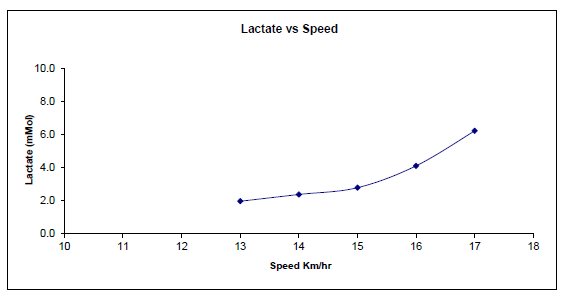
Specifically, we measured VO2 max and blood lactate during a progressively increasing-speed treadmill run. The metabolic results were surprising. With a VO2 max on the low end and a maximal blood lactate value of 6 mmol/L (Figure 1), the metabolic profile appeared submaximal. Nevertheless, I watched the athlete personally, and he was very close to, if not at, his limit. Despite kinematics suggesting an efficient running technique, his running economy (the oxygen cost of maintaining speed – see Figure 2) was remarkably poor.

Figure 1: Lactate results during a progressively increasing speed protocol
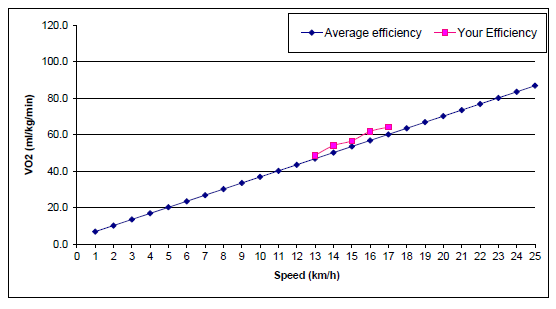
Figure 2: Running economy (VO2 vs Speed). When the line (pink) is above the reference (blue), this indicates below-average running economy.

Expert Insight: The Metabolic Ceiling

Ken Brunet, a highly experienced Clinical Exercise Physiologist and owner of the Peak Centre for Human Performance, explains the metabolic data in context:

"For an athlete of this calibre, you would expect to see higher lactates as they reach peak velocities. Seeing a ceiling at 6 mmol/L (Figure 2) alongside such a high respiratory effort suggests a potential dual constraint. While a neuromuscular bottleneck may have prevented a true maximum effort, we also must consider the metabolic fuel source. If glycogen stores were depleted, the athlete would not be able to drive the anaerobic system to its full potential."

Symmetry vs Stability: The Pelvic “Whip” Impacts Running Economy

Gait analysis showed near-perfect symmetry (98%) in stride metrics and propulsion. Vertical acceleration (the rate at which the body moves up and down) was low, and transitions from heel strike to toe-off were smooth. On paper, he looked efficient; however, a red flag indicated something was wrong. We found signs of right-sided pelvis instability (Figure 3) during the stance phase, suggesting a lurking biomechanical issue (5).
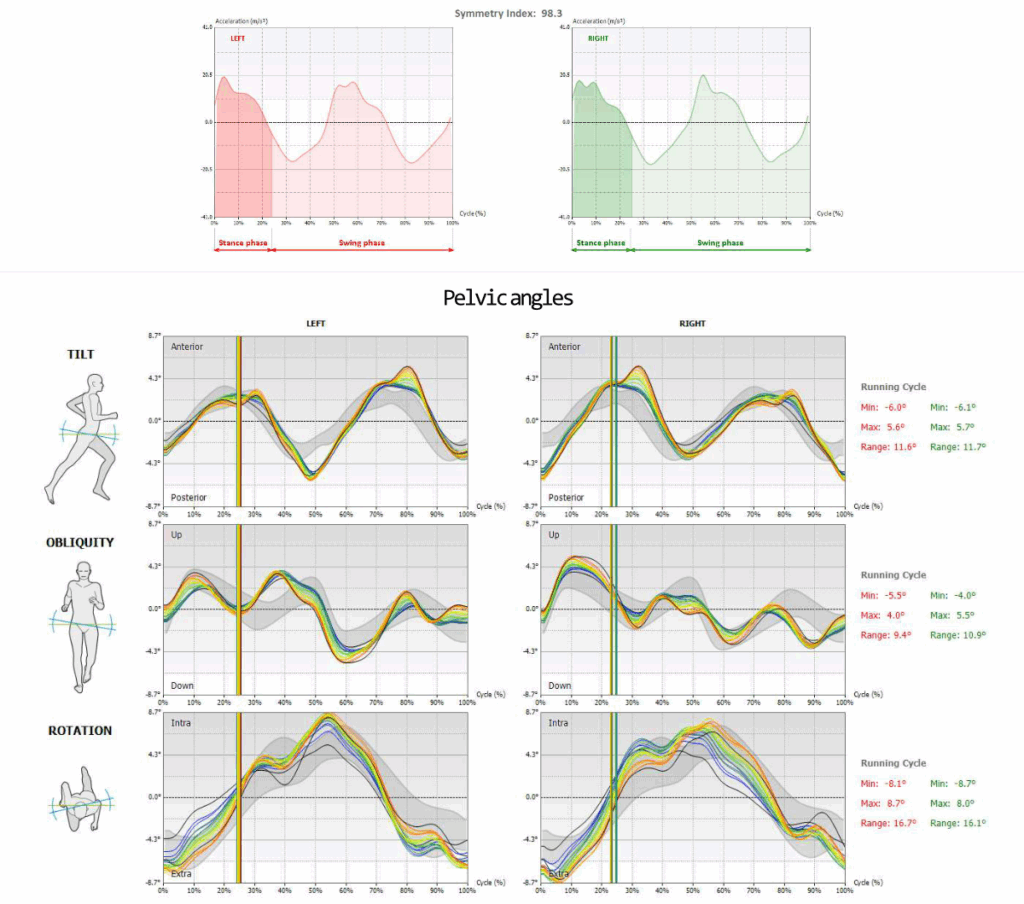
Kinematic gait analysis showing vertical acceleration and 3D pelvic angles.

Figure 3. Gait analysis results showing vertical acceleration and pelvic angles while running.

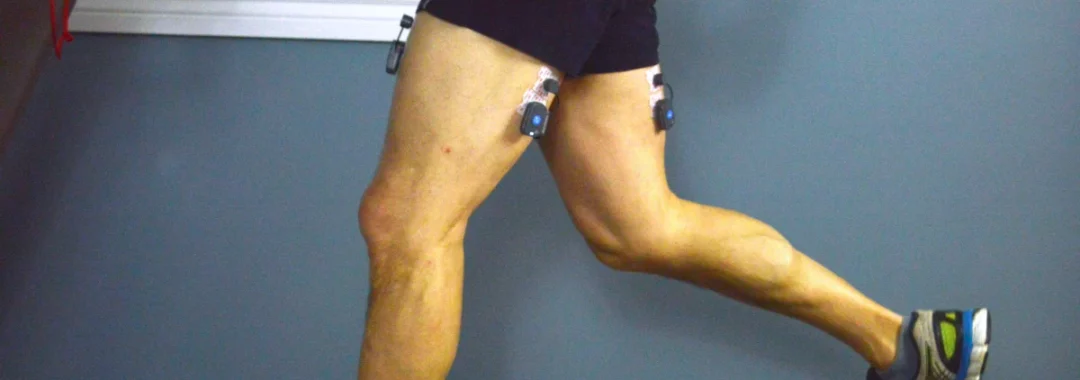
Then came the “smoking gun”, the EMG results. We examined the gluteus medius, rectus femoris, and the hamstrings (semitendinosus and biceps femoris) to examine muscle timing during the running stride (Figure 4).
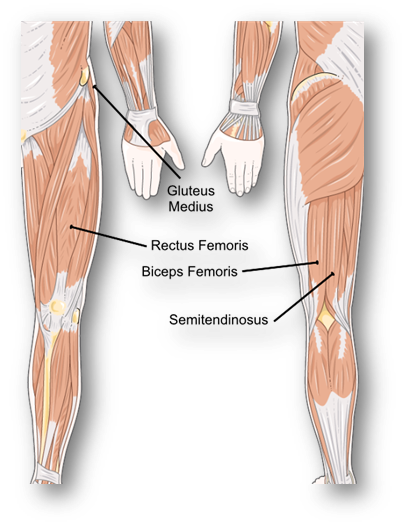
Figure 4. Anatomy of the lower leg showing gluteus medius, rectus femoris, biceps femoris, and semitendinosus
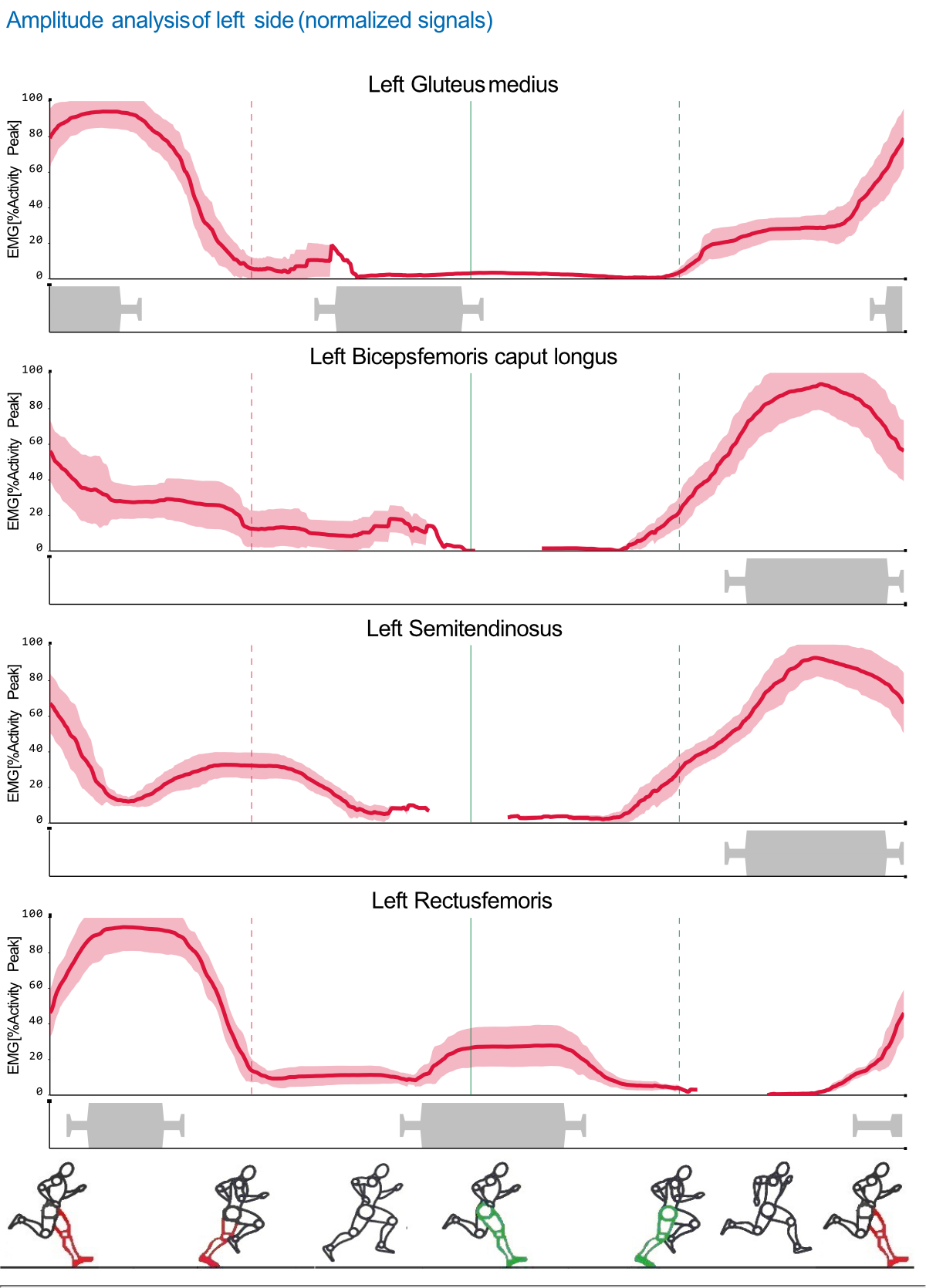
For efficient running, the hamstrings should be relatively “quiet” for most of the swing phase and then fire in a fast burst just before and into heel strike to stabilize the knee and control extensions (1–3). The rectus femoris, gluteus maximus, and other hip and ankle muscles then contribute to forward propulsion (4). Figures 5 and 6 show that the right hamstring remained active longer and at a high level during the stance and swing phases.

Figure 5. Left leg muscles showing normalized EMG amplitude during the running stride. Red dashed line = toe off. Shaded bars below muscle activation chart illustrate normative muscle activation for elite runners.
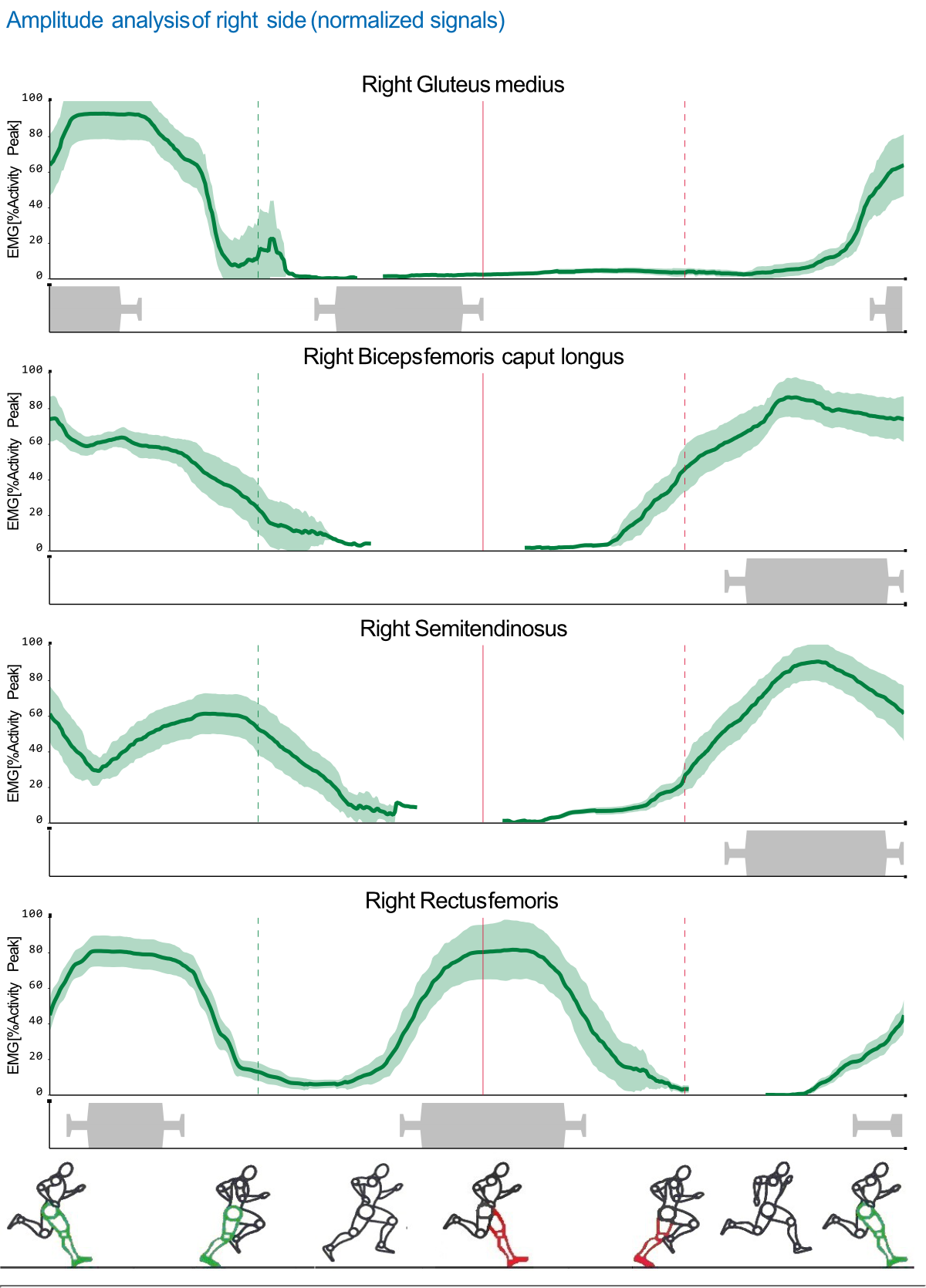
Figure 6. Right leg muscles showing normalized EMG amplitude during the running stride. Green dashed line = toe off. Shaded bars below muscle activation chart illustrate normative muscle activation for elite runners.
The Neuromuscular Ceiling: Why An Over-Active Hamstring Limits Running Economy

We discovered a clear issue: muscle coactivation between the hamstrings and quadriceps was creating a “neuromuscular ceiling”. This ineffective timing likely increased energy demand and stress on the hamstrings. It is like driving a car with the parking brake on: poor fuel mileage and capped power output.

Expert Corner: The Coactivation Index and Running Economy

It is important to note that coactivation isn't always "bad." In fact, well-timed coactivation is essential for high-performance running. This creates joint stiffness in the leg for efficient force transfer at ground contact. The issue is neuromuscular timing. While "stiffness" at impact improves running economy, mal-timed or sustained coactivation during the propulsion phase acts as a brake,  increasing metabolic stress. Every watt of power generated by the Rectus Femoris must overcome the "braking force" of a non-relaxed hamstring, while the hamstring tries to resist the more powerful Rectus Femoris. This could explain why the RQ (see Appendix) is high, but lactate is low (velocity is limited).

CWT: The Secret Weapon

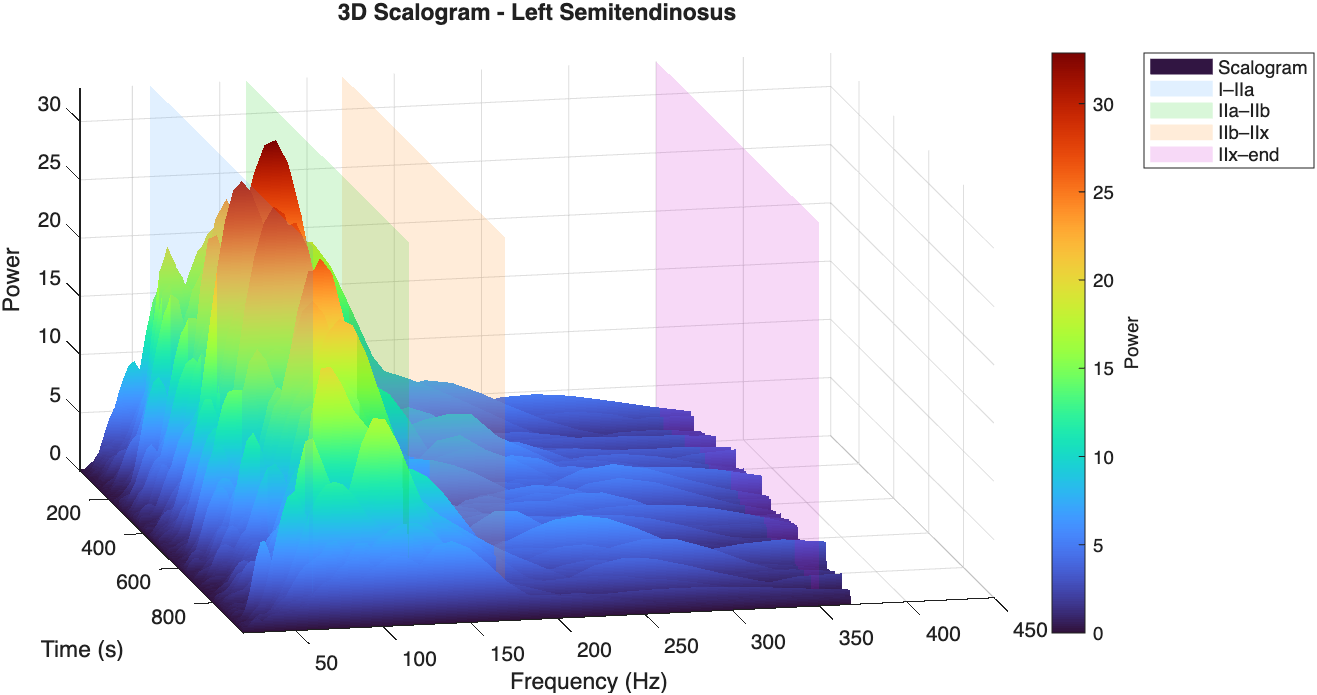
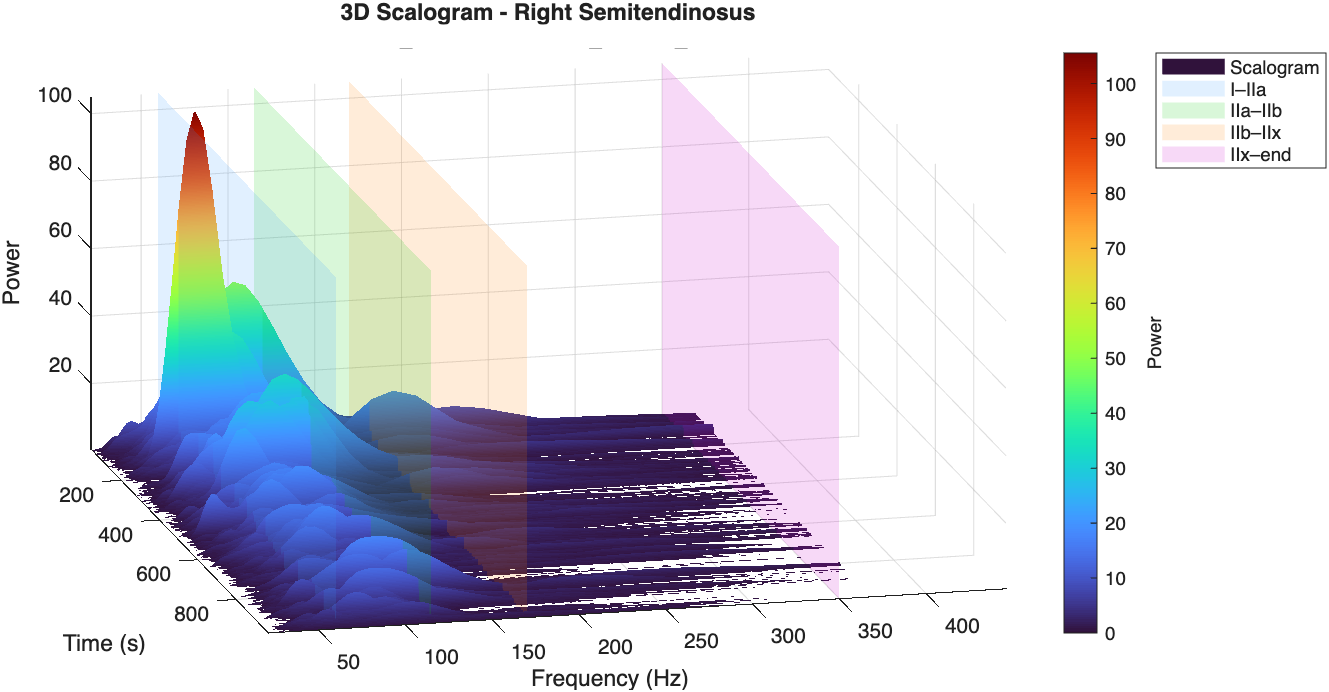
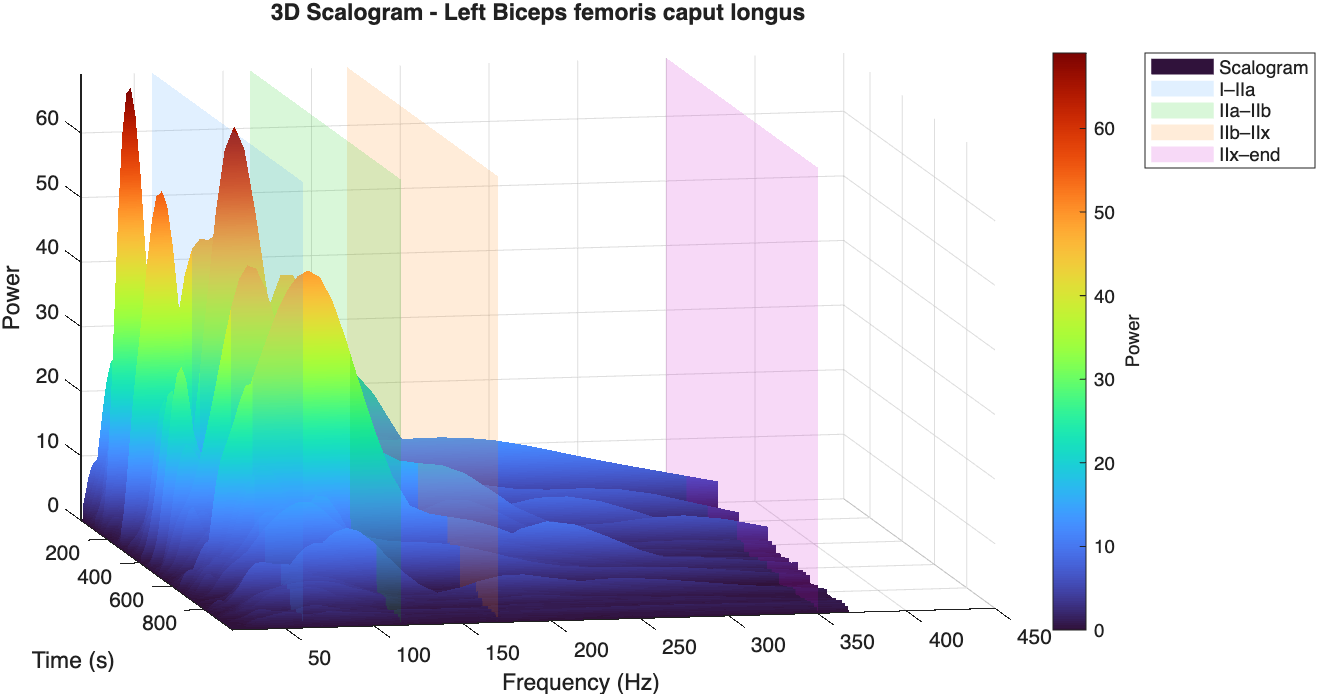
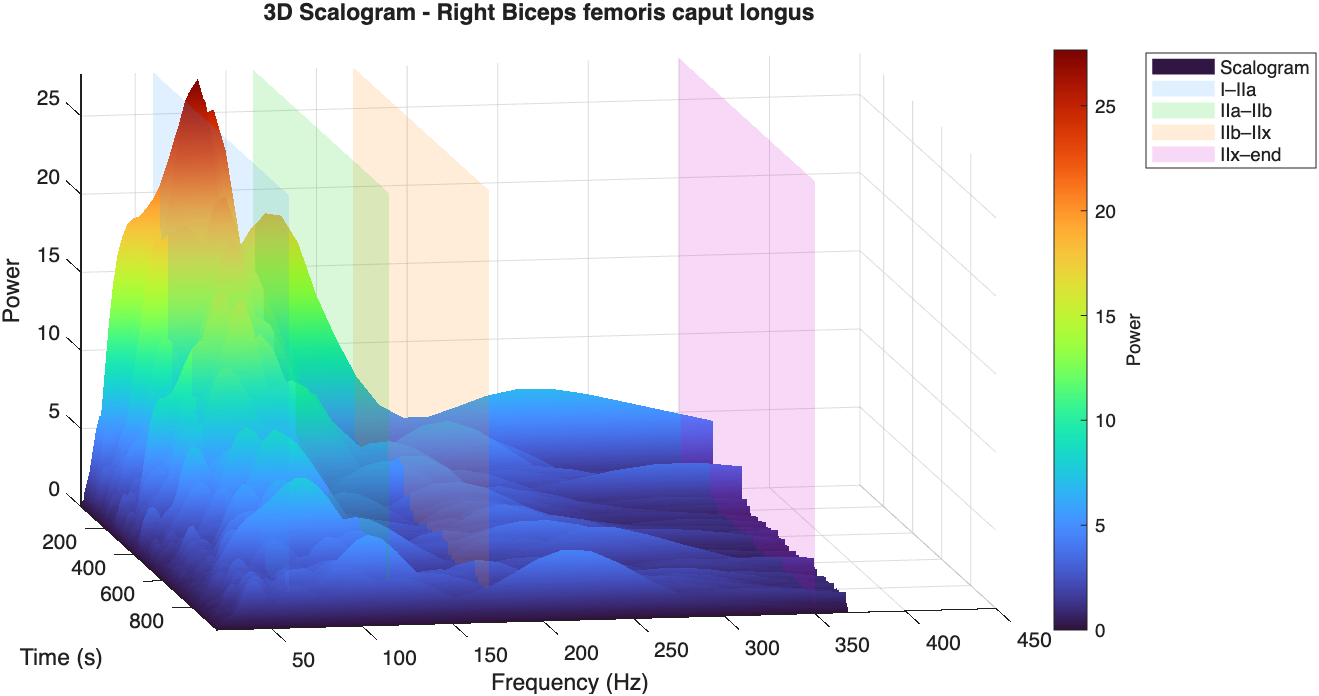
We used a technique called Continuous Wavelet Transform (CWT) to break down the EMG signal and visualize muscle recruitment patterns throughout the test (Figure 7). Special thanks to Dr. Victor Chan (Celestra Health Systems / University of Ottawa / Google Scholar), whose expertise in EMG and muscle fatigue was instrumental in interpreting these findings.

A progressive decrease in CWT magnitude across the frequency spectrum was observed in the right hamstring group, consistent with neuromuscular offloading or de-recruitment. Because this pattern was absent in the rectus femoris, gluteus medius, and contralateral hamstrings, the data suggest an issue with the right hamstrings rather than central fatigue factors.

Figure 7: 3D EMG scalogram of a continuous wavelet transform (CWT) analysis for the hamstrings. The right side exhibits significantly reduced power intensity, suggesting compensatory offloading and decreased motor unit recruitment.

Inhibition and Instability

This inhibition can contribute to the front-to-back “pelvic whip” motion detected by the gait analysis (5). As the hamstrings shut down, it is conceivable that the gluteus maximus and medius compensated by trying to share the load, although this is hypothetical since we did not measure gluteus maximus activity. This potential transfer of force may increase strain on the hip joint and the muscles surrounding it. Consequently, this internal force tug-of-likely created a biomechanical tax, contributing to reduced running economy and lower VO2 and lactate values.

The Fix: Releasing the Brakes to Improve Running Economy

Improving running economy isn't always about logging more miles or doing heavier squats and lunges. Strengthening a muscle that fires at the wrong time in isolation may simply increase the brake's tension. Instead, the goal is to focus on improving neuromuscular coordination as this has been associated with improved running economy (6) :


  1. The "Push, Don't Pull" Cue:

    Shift from “pull through the stride using your glutes” or “clawing the ground” to "pushing the ground away”. This can work to maximize reciprocal inhibition (expert callout) to naturally quiet the hamstring and encourage a properly oriented push phase.

  2. A-Switches:

    Rapid, rhythmic leg switches teach the brain to snap the leg into place just before contact, without holding tension throughout the swing. This “switches” the firing patterns in the thigh from drive to recovery.

  3. Wicket Runs:

    Use mini hurdles to train a quick, vertical foot strike under the center of mass, to reinforce a brief, powerful hamstring contraction followed immediately by relaxation.

Expert Corner:  The "Push" cue taps into reciprocal inhibition, where activation of one muscle group helps reduce activity in its opposite pair,  even though this reflex is more complex in humans than simple textbook diagrams suggest (7). By focusing on the Quad/Glute push, we are "hacking" the nervous system's strongest pathway to force the hamstring to release its grip.

Once excessive coactivation has been reduced and timing improved, focus on hamstring strengthening. Including eccentric and isometric strengthening at key knee angles should help to bring everything back into balance.

The Chicken or the Egg: Pelvis vs. Hamstring

It is difficult to determine whether the coactivation caused the pelvis instability or whether the instability triggered the guarding activity in the thigh. In practice, these factors often interact and reinforce each other. This underscores the benefit of baseline testing. Without knowing what it was like before the hamstrings became an issue, it can be difficult to narrow down the initial cause. Regardless of the origin, tackling improper muscle coactivation and timing early in the process makes sense. Only by improving the neuromuscular timing can we effectively transition to conditioning exercises that strengthen the entire chain.

Getting to the Finish Line

If you are training harder but moving more slowly, it may not be a fitness problem; you could have an efficiency leak that leads to poor running economy. By releasing the internal brakes and teaching your muscles to fire optimally, you don’t just improve running economy, you effectively remove a governor from your metabolic engine and give yourself the chance to express your true performance. Reducing excessive coactivation and optimizing timing not only improves running economy but may also lower stress on the hamstrings and decrease injury risk.

Mike Croskery, M.Sc. HK (Biomechanics), Clinical Exercise Physiologist

About the Author: Mike Croskery, M.Sc. HK (Biomechanics), CSEP-CEP

Mike Croskery is a Clinical Exercise Physiologist and CSEP High Performance Specialist™ with nearly 30 years of experience helping people from diverse populations improve their health, fitness, and performance. Mike’s true specialty lies in solving complex individual issues—whether they affect a runner's economy or a patient’s health in the context of chronic disease.

After years of field experience with elite athletes, first responders, and fitness and health enthusiasts, Mike earned his Master’s in Human Kinetics (Biomechanics), focusing his research on the practical use of surface EMG and force measurement combined with motion capture technology. Today, he applies those advanced diagnostic tools to a wide range of clients, including those managing cardiovascular, metabolic, and neuromuscular conditions. Mike’s unique approach blends academic research with 30 years of hands-on experience to help every individual—from the Olympian to the individual with chronic health concerns—move better and live healthier.

Are you interested in reading more about training?

A woman and a man write on a whiteboard to design a weight training routine

Design a Weight Training Routine: Your Playbook

Have you ever stood in the gym and felt overwhelmed by the next steps in your quest to build muscle and strength? In fact, you’re not alone if it feels like cracking a complex code to design a weight training routine that works. Consequently, common questions can bounce around in your head, such as: How many sets? What reps? Which exercises actually work? Additionally, how often should I even train?

Low intensity cardio to keep lactic acid low for fat loss.

Lactic Acid and Fat Burning: Optimize Workouts for Max Fat Loss

You’ve just finished your aerobic workout, you’re breathing hard and heavy, and your legs are weak and are burning like they're on fire. ‘That fat is going to be burned up like crazy,’ you think to yourself. However, what you might not know is that you may have just sabotaged your fat-burning quest. Specifically,  generating high lactic acid levels from your hard workout.

References

Posted in Research.