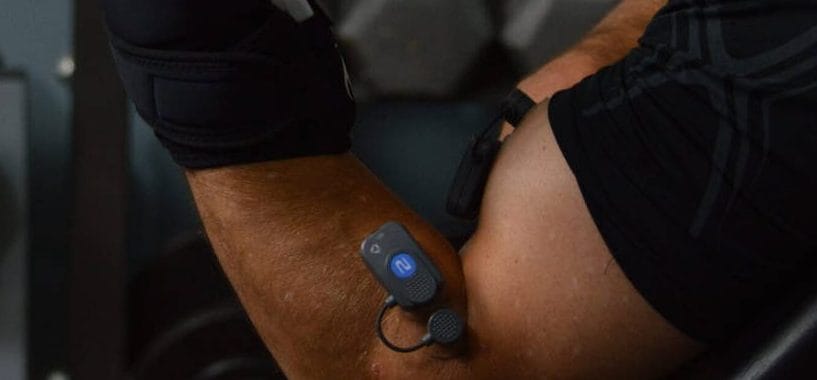
Best Biceps Exercises for Long and Short Head Development and Strength: An EMG Study
By Mike Croskery, M.Sc. HK (Biomechanics) - Clinical Exercise Physiologist
Introduction
Everyone wants to have bigger, more shapely, and stronger arms, but choosing the most effective biceps exercises can be tough to separate myth from fact. Does the incline curl really target the long head (biceps peak), is the hammer curl the best for the short head (biceps width and thickness), or are these just common training myths? To find the answer, I analyzed five popular exercises using state-of-the-art EMG technology. By measuring the electrical signals generated within the muscle fibres that result in muscle contraction, we can move past gym folklore and look at what the data actually reveals about the long and short heads of the biceps brachii.
EMG Study: Key Findings for the Best Biceps Exercises
Long Head (Peak): Incline Curl and Wide-Grip Cable Curl showed high, balanced activation for those seeking to target the outer biceps.
Short Head (Width): Preacher Curl demonstrated a specific bias toward the inner biceps, likely due to the shoulder being in a flexed position.
The Hammer Curl Surprise: This movement resulted in significantly lower biceps activation. While it is excellent for the brachialis and brachioradialis, it may not be the primary choice for direct biceps isolation.
Core Principle: While specific biceps exercises can shift the emphasis, overall balanced development and strength are best achieved through a variety of different movements and progressive overload.
Understanding EMG Data
EMG measures the electrical signals your muscles generate when they contract. In simple terms, a stronger EMG signal indicates that the muscle is working harder; this intensity factor is crucial for building strength and size (8). We can identify which moves stand out by comparing the effort required by the short and long biceps heads during each exercise. While fitness folklore often suggests dramatic differences in activation, the reality may not be so clear-cut, except in specific key scenarios.
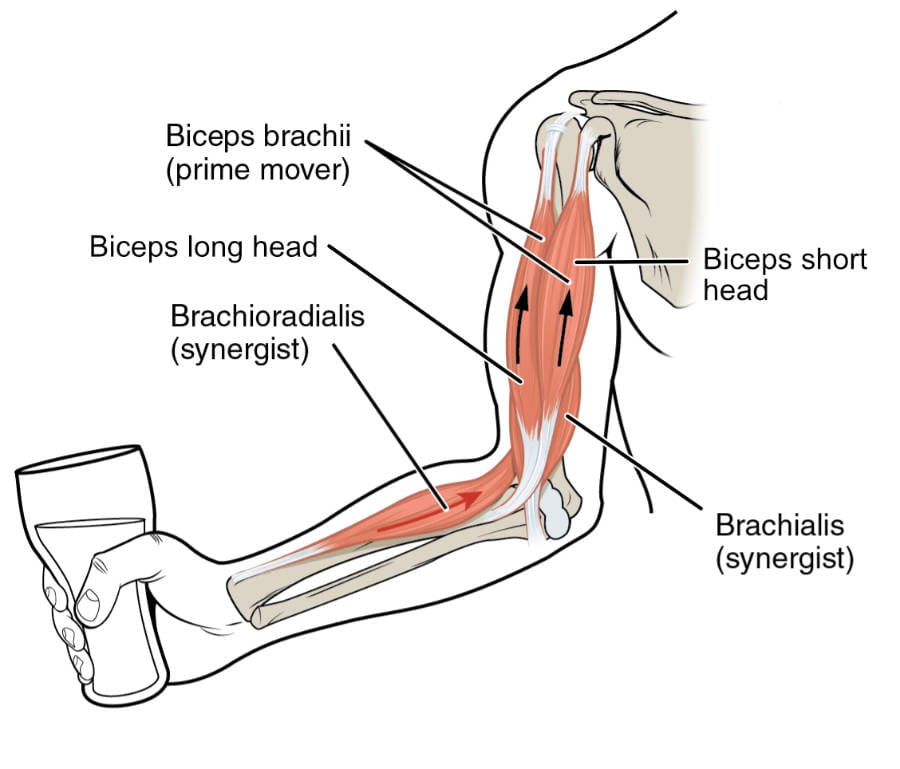
Figure 1: Anatomy of the upper arm. Photo credit (3).
Anatomy of the Biceps Brachii: Long vs. Short Head
Before diving into the results, let’s break down the basics of biceps anatomy and how these muscles work during your favourite arm curls.
The biceps brachii is a large muscle at the front of the upper arm. It consists of distinct parts, or "heads":
- The Long Head: Runs along the outer arm and contributes to what is referred to as the "peak" of the biceps
- The Short Head: Located on the inner arm, it is what can help make your arm look wider and thicker.
These crucial biceps heads let you bend your elbow and rotate your hand into a palm-up position (supination). Because each of these heads has a different origin point on the shoulder, arm position and grip may emphasize one head over the other and thereby may have an influence on development and strength.
Study Design: How We Measured Muscle Activation
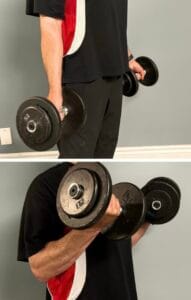
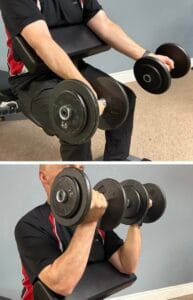
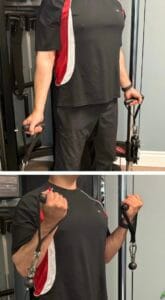
Now that we know the role of the biceps muscle, the question is: which arm exercises target them best? To answer that, I designed an EMG study to compare how different arm exercises activate the long and short heads of that muscle the best. I recruited a group of men and women with various fitness levels to test five popular biceps exercises you might include in your upper arm workouts. The exercises were chosen based on how they’re believed to activate either the short (inner) or long (outer) head of the biceps:
- Incline Curl: People often believe this targets the long head.
- Hammer Curl: Sources vary on whether this works the long or short head.
- Dumbbell Curl: This classic move is thought to activate both heads equally.
- Preacher Curl: Often said to emphasize the short head.
- Wide-Grip Cable Curl: Claimed to focus on the short head.
While these are popular choices for targeting the biceps brachii, our EMG research provides evidence-based insights into their effectiveness on muscle activation. Nevertheless, it's essential to note that other exercises not tested here may yield different results.
Working With EMG
Since EMG is similar to a very sensitive voltmeter that measures the electrical signals your biceps muscles produce while performing an arm curl exercise, the raw data can vary between individuals. Factors such as muscle size, body fat, and genetics (1) all contribute to the final signal. To make the EMG results easier to interpret, I compared each exercise to a baseline: the dumbbell curl. This helps show which arm exercises activate the biceps more or less relative to this standard and is called normalizing the EMG signal.
Statistical Significance vs Random Chance
Muscle activation patterns can differ between individuals. To account for this, we used statistical methods to analyze the variations. This helped determine if the differences were meaningful or simply due to random chance.
EMG Results: Best Exercises for the Long and Short Head
The results clearly showed that the hammer curl had the lowest biceps activation for both the long and short heads (Figure 2), regardless of which arm was used. The error bars represent the variation between participants. This highlights that activation can differ based on individual factors like muscle and limb length and movement patterns.
What Does it All Mean?
These findings raise an important question: Are these biceps exercise differences significant enough to influence your workout choices? Let’s explore what the data really means for your biceps training.
Figure 2: Biceps Head Activation for Five Arm Curl Exercises

When comparing how much the short and long heads of the biceps were activated, most of the arm curl exercises produced fairly similar results for both arms. However, the preacher curl notably showed a tendency to activate the short head more relative to the long head. This finding might be because the preacher curl locks the upper arm in an extended position, placing the long head in a shortened position, thereby forcing the short head to adapt to the higher demand (4).
As for which of these upper arm exercises challenged the biceps the most, only one stood out as statistically significant (Figure 3). The hammer curl consistently showed significantly less activation than the incline curl for both biceps heads. Additionally, it had significantly lower short-head activation when compared to the incline, cable, and preacher curls. However, we know that statistical significance doesn’t always tell the whole story for biceps training; looking at effect size helps complete the picture and understand the practical relevance of the EMG results.
Figure 3: Statistical Significance Between the Long and Short Biceps Head for 5 Arm Curl Exercises

Effect size helps us understand how big or meaningful these differences are in real terms for application in training routine design, beyond just statistical significance. While the hammer curl consistently showed lower biceps activation than all the other arm exercises, its large effect sizes (7) highlight its potential unique role in developing the brachialis and brachioradialis muscles rather than providing maximal direct stimulation to the biceps (Figure 4). This could be useful in a rehabilitation setting to deload the biceps' long and short heads to aid in recovery.
Figure 4: Magnitudes of the Effect Size Between Exercises for the Long and the Short Head of the Biceps

The hammer curl stands out due to its unique biomechanics, which shift the workload to other arm muscles, such as the brachialis (located under the biceps) and the brachioradialis (in the forearm) (5,6). This is underscored by its large effect sizes, highlighting a clear, practical difference (Figure 4). Despite this, the hammer curl's activation patterns between the long and short heads are similar to those of the other exercises, like the dumbbell, incline, and cable curls, making it still a valuable and versatile option for overall arm and forearm thickness and strength.
Choosing the Best Biceps Exercises for the Long and Short Heads Development
With all this data, what’s the best biceps exercise for developing both the long and short heads? The answer isn’t black and white.
While the hammer curls revealed significantly lower biceps activation overall, the incline, dumbbell, cable, and preacher curls produced very similar activation levels among themselves. Although the preacher curls may slightly emphasize the short head at the expense of the long head (Figure 5), the overall activation level in the preacher has a small effect size compared to the other exercises, excluding the hammer curl, so it may be practically irrelevant. However, if you do choose to incorporate hammer curls into your routine, be aware that you'll likely need to increase the intensity (e.g., more weight or reps) to achieve similar direct biceps stimulation as the other arm curl exercises.
Figure 5: Magnitudes of the Effect Sizes When Comparing Short Head Activation to Long Head

What Does This Mean for My Arm Workouts?
A higher biceps EMG signal generally indicates that the biceps muscles are working harder under similar conditions. This can be great for growth and strength. However, EMG data is just one piece of the puzzle.
The real key to overall arm development and strength is the right balance of sets, reps, and load (8). You can build muscle with light weights and higher reps, or heavier weights and fewer reps.
Most lifters will see good upper arm growth with 3 to 6 sets of 8 to 12 reps performed twice weekly. For raw strength, stick to heavier weights in the 3–8 rep range with fewer sets (2 – 4).
To learn how to put all of this together into a complete training program, including exercise selection, scheduling, and proper intensity, read: How to Design a Weight Training Routine: A Practical Guide.
Practical Training Implications
This study reveals that none of the arm curl exercises significantly target the inner or outer biceps by activating one head over the other. Although not statistically significant, the preacher curl may target the short biceps head comparatively more, at the expense of reduced activation of the long head. If muscle growth is your goal and you choose to incorporate hammer curls, consider increasing the number of reps and sets due to the lower biceps activation overall. However, if you’re looking for pure biceps strength, you may want to prioritize other arm curl exercises instead.
Key takeaways
Although statistical significance is limited to the hammer curl's lower activation, the effect sizes highlight the practical relevance of specific biceps exercises.
- Hammer Curl's Unique Role: The hammer curl uniquely reduces direct biceps activation compared to other arm exercises. However, its larger effect sizes for the short head indicate a possible more substantial contribution to overall arm thickness as well as forearm size.
- General Growth and Symmetry: For balanced biceps growth and symmetry, cable curls or incline curls are a great choice that evenly activate both biceps heads.
- Long Head Focus: Most exercises perform similarly at the same load. Pick the one you enjoy most.
- To Target the Short Head: Preacher curls are a solid choice. They result in less activation of the long head, forcing the short head to work harder. Avoid hammer curls if you want to target the short head, as they result in less activation in that area compared to the other exercises.
- Developing Arm Thickness: Although hammer curls don’t maximize biceps activation, they may target the brachialis and brachioradialis more leading to a thicker arm look.
Final Thoughts on How to Choose the Best Biceps Exercises for the Long and Short Heads
At the end of the day, there’s minimal difference in short and long head activation across most biceps exercises. Want to build the biceps 'peak'? Simply choose an exercise performed in a palms-up (supinated) position. The key is to find the one you genuinely feel working the muscle. For well-rounded biceps and stronger arms, aim for variety—a mix of cable curls, incline curls, preacher curls, and even hammer curls (when the total volume is adjusted) will cover all your bases.
There may also be times when you wish to reduce the strain on the biceps (long or short heads) in a rehabilitation scenario. In this case, hammer curls are a great choice, as they still allow for functional arm flexion while reducing the overall strain on the biceps. Similarly, if the long head is affected, preacher curls may be a wise strategy to train the short head while minimizing tension on the long head.
Understanding the science behind your training, combined with dedication, consistency, and proper form, will always lead to the results you want, whether you’re pursuing peak aesthetics, raw strength, or functional performance. Stay consistent, train smart, and let progress be the true measure of success.

About the Author: Mike Croskery, M.Sc. HK (Biomechanics), CSEP-CEP, HPS, CSCP
Mike Croskery is a Clinical Exercise Physiologist, High Performance Specialist™, and a Certified Strength and Conditioning Professional holding an M.Sc. in Human Kinetics (Biomechanics). With nearly 30 years of experience working with everyone from Olympic athletes to individuals managing chronic disease, Mike specializes in solving complex performance and health challenges through EMG analysis, force measurement, and motion capture. His approach blends rigorous academic research with decades of hands-on experience to help every individual move better and perform at their best.
You might be interested in reading more about building muscle and strength...
Revealing Knee Replacement Exercises to Solve Muscles that Struggle
This article examines the activation of three key thigh muscles—vastus lateralis, vastus medialis, and biceps femoris—using EMG analysis before and after total knee replacement and its role in choosing effective knee replacement exercises. Case studies revealed significant shifts in muscle engagement, offering insights into compensation patterns and guiding the development of more effective, science-based rehabilitation strategies for post-surgical recovery.
Create a weight training routine that works for you...
How to Design a Weight Training Routine: Your Playbook reveals how to unlock the science and strategy behind building a personalized, effective weight training routine for more muscle and strength delivered in an easy-to-follow format.

How bodybuilders built their physiques from the 1940's-90's
1995 Training Review: 1940s-90s Bodybuilding & Legends is an in-depth review written in the mid-nineties as to how bodybuilders up to that time period trained and the techniques and strategies they used to gain mass and get lean.
ABSTRACT, SCIENTIFIC REFERENCES AND TECHNICAL APPENDIX
Abstract
This EMG study examines the effectiveness of five popular biceps exercises —incline, hammer, dumbbell, preacher, and wide-grip cable curls—in selectively activating the lbiceps brachii.
Despite widespread beliefs about certain exercises targeting specific biceps heads, empirical evidence is often lacking. This research aimed to distinguish between anecdotal claims and scientific fact by analyzing muscle activation patterns during common arm exercises. Our findings indicate that incline curls, wide-grip cable curls, preacher curls, and dumbbell curls did not show statistically significant differences in overall biceps activation.
However, hammer curls consistently demonstrated the lowest biceps activation across both heads. Further analysis revealed that preacher curls tended to have greater short head activation relative to the long head, likely due to biomechanical positioning. While statistical significance for targeting specific biceps heads was limited, effect size analysis highlighted practical differences. The significantly lower biceps activation during hammer curls suggests their primary role may lie in developing the brachialis and brachioradialis, contributing to overall arm thickness rather than maximal biceps stimulation.
- Farina, D, Merletti, R, and Enoka, RM. The extraction of neural strategies from the surface EMG. J Appl Physiol 96: 1486–1495, 2004.
- Google Trends. Comparison of dumbbell, hammer, incline and concentration curls. Google Trends. , 2024.Available from: https://trends.google.com/trends/explore?date=today%205-y&q=dumbbell%20curl,Hammer%20Curl,Incline%20Curl,Concentration%20Curl
- Hamm, K. 9.7 Interactions of Skeletal Muscles, Their Fascicle Arrangement, and Their Lever Systems. OpenStax (OpenStax is licensed under a Creative Commons Attribution 4.0 International License, except where otherwise noted.), 2016 [cited 2025 Mar 18].Available from: https://opentextbooks.uregina.ca/humanbiomechanics/chapter/11-1-interactions-of-skeletal-muscles-their-fascicle-arrangement-and-their-lever-systems/
- Oliveira, LF, Matta, TT, Alves, DS, Garcia, MAC, and Vieira, TMM. Effect of the shoulder position on the biceps brachii EMG in different dumbbell curls. J Sports Sci Med 8: 24, 2009.
- Praagman, M, Chadwick, EKJ, van der Helm, FCT, and Veeger, HEJ. The effect of elbow angle and external moment on load sharing of elbow muscles. Journal of Electromyography and Kinesiology 20: 912–922, 2010.Available from: https://linkinghub.elsevier.com/retrieve/pii/S1050641110000623
- Praagman, M, Praagman, J, Chadwick, EKJ, van der Helm, FCT, and Veeger, HEJ. The effect of PCSA and moment arm distributions on the load sharing of arm muscles. Muscle load sharing 85, 2008.
- Schober, P, Mascha, EJ, and Vetter, TR. Statistics From A (Agreement) to Z (z Score): A Guide to Interpreting Common Measures of Association, Agreement, Diagnostic Accuracy, Effect Size, Heterogeneity, and Reliability in Medical Research. Anesth Analg 133: 1633–1641, 2021.Available from: https://journals.lww.com/10.1213/ANE.0000000000005773
- This pronouncement was written for the American College of Sports Medicine by: William J. Kraemer, Ph.D., FACSM (Chairperson); Kent Adams, Ph.D.; Enzo Cafarelli, Ph.D., FACSM; Gary A. Dudley, Ph.D., FACSM; Cathryn Dooly, Ph.D., FACSM; Matthew S. Feigenbaum, Ph.D., FACSM; Steven J. Fleck, Ph.D., FACSM; Barry Franklin, Ph.D., FACSM; Andrew C. Fry, Ph.D.; Jay R. Hoffman, Ph.D., FACSM; Robert U. Newton, Ph.D.; Jeffrey Potteiger, Ph.D., FACSM; Michael H. Stone, Ph.D.; Nicholas A. Ratamess, M.S.; and Travis Triplett-McBride, Ph.D.. Progression Models in Resistance Training for Healthy Adults. Medicine and Science in Sports and Exercise 34(2):p 364-380, February 2002.